A Ipv6 Follows Ipv5 Which Used 48-bit Addresses
A they cannot be used for voice and video applications B Windows Server 2012 does not support them C they are 128 bits in length D IPv6 follows IPv5 which used 48-bit addresses. Stack Exchange Network Stack Exchange network consists of 179 QA communities including Stack Overflow the largest most trusted online community for developers to learn share their knowledge and build their careers.
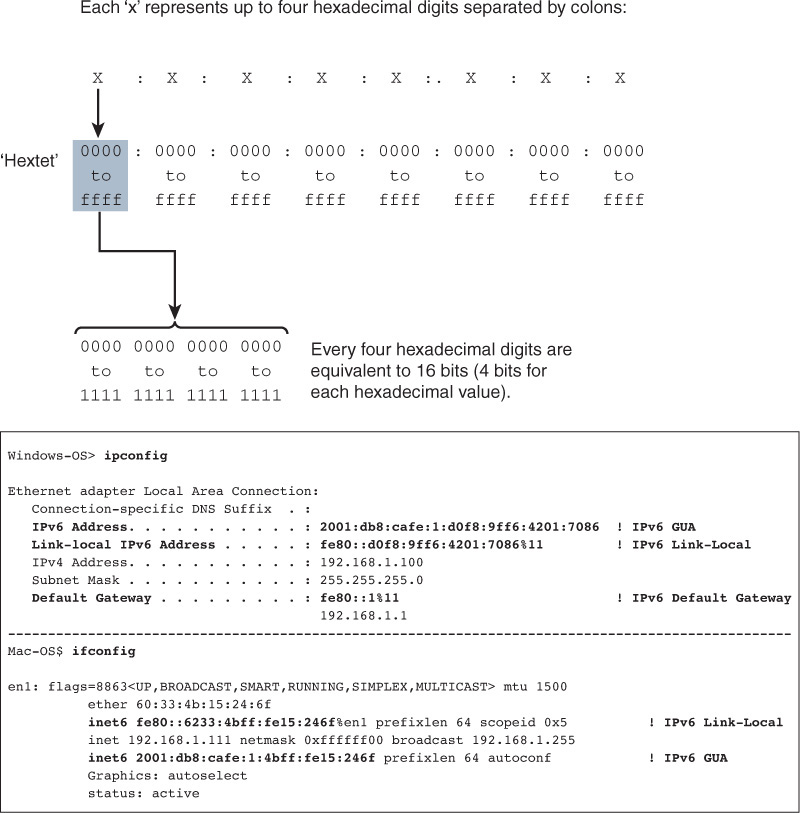
Ipv6 Address Representation And Address Types Representation Of Ipv6 Addresses Cisco Press
Your email address will not be published.

. Which of the following is true of IPv6 addresses. I just want to know was there any IPv5 also. IPv6 Address is the new generation IP address that is mainly developed to overcome IPv4 exhaust and its limitations.
Here our Subnetting bits that we will use on an address will be calculated according to our need. IPv6 follows IPv5 which used 48-bit addresses d. Also called unique local address ULa.
The IETF anticipating the need for more IP addresses created IPv6 to accommodate the growing number of users and devices accessing the Internet. As mentioned before IPv4 uses 32-bit addresses which allows 429 billion unique addresses. They are 128 bits in length.
In a different perspective this is 252 addresses for every observable star in the known universe. 0 5 pts Question 14 Incorrect Incorrect Which of the following is true of IPv6 addresses. An IPv6 normal address must have eight segments however a short form notation can be used in the Tape Library Specialist Web interface for segments that are zero or.
The column headings and values are as follows. View Test Prep - Exam 7 8 9 Review2 from IT 1080 at University of Cincinnati Main Campus. The second half of the address last 64 bits is always used for Interface ID.
Exam 7 8 9 Review IT 1080 Spring 2014 A Terabyte is the. Our slash notation will be 483 51 51. Which protocol enables routers to build tables of routing information.
A computers primary purpose is to serve Web pages and respond to email transfer requests. A they are 128 bits in length B Windows Server 2008 does not support them C IPv6 follows IPv5 which used 48-bit addresses D they cannot be used for voice and video applications. The MAC address of a system is composed of 48-bits and represented in Hexadecimal.
They cannot be used for voice and video applications. Other Apps - April 13 2022 This led to the 128-bit IPv6. This new Internet Protocol version is IPv6 Internet Protocol version 6.
Which OSI model layer is involved with user logon and logoff. As you know IPv4 Addresses were limited and exhaused shortly. An IPv6 address is how many bits long.
The segments are separated by colons - not periods. For example if we have a 48 prefix and we need 8 subnets we can use 3 subnetting bits 238. The address is a hybrid between a global unicast address that works on the Internet and a link-local unicast address that works on only one link.
They are 128 bits in length Windows Server 2019 does not support them IPv6 follows IPv5 which used 48-bit addresses they must be statically assigned. Which of the following is true of IPv6 addresses. A Ipv6 Follows Ipv5 Which Used 48-bit Addresses.
For the new technologies more IP addresess needed and for this need a new IP version has developed. 143 Internet Protocol Version 6 IPv6 Review. Interface ID takes advantage of this uniqueness of MAC addresses.
Unlike IPv4 IPv6 had trillions of possible addresses so we should be safe for a while. In most cases a subnet calculator will not be required since IPv6 using hex hexadecimal and so long as the prefix length is a multiple of 4 it makes it quite easy. The second half of the address last 64 bits is.
The modified EUI-64 format interface identifier is derived from the 48-bit link-layer MAC address by inserting the hexadecimal number FFFE between the upper 3 bytes OUI field and the lower 3 bytes serial number of the link layer address. Heres how Wikipedia expresses it. IPv6 has three different types of Unicast Address scheme.
128 8 groups of 16 bits 00000000 Each 16 bit group of an IPv6 address is written as. IPv6 addresses are based on 128-bit hierarchical addressing and the IPv6 header has been simplified with fewer fields improving packet handling. Internet Protocol version 6 IPv6 is the most recent version of the Internet Protocol IP the communications protocol that provides an identification and location system for computers on networks and routes traffic across the InternetIPv6 was developed by the Internet Engineering Task Force IETF to deal with the long-anticipated problem of IPv4 address exhaustion and is.
MAC addresses are considered to be uniquely assigned worldwide. Meanwhile IPv5 laid the groundwork for the voice-over-IP technology that we use to. Or there is any other logic in naming this version of IP as IPv6.
Y where y is called a segment and can be any hexadecimal value between 0 and FFFF. You use the following representation with zeros compressed to represent this prefix. This led to the 128-bit IPv6.
The site prefix of an IPv6 address occupies up to 48 of the leftmost bits of the IPv6 address. Leave a Reply Cancel reply. An IPv6 address contains a series of eight 4-character hexadecimal numbers that can contain numbers from 0 to 9 and letters from A to F.
An IPv6 Normal address has the following format. With this IPv6 Subnetting we can use 8 subnets with this IPv6 Prefix. The column one heading is Network Destination and the value is 192168100.
The column two heading is Netmask and the value is 2552552550. For example this is also where the table IPv6 Subnet Reference IP Address comes in a lot of handy above. How is an EUI-64 format interface ID created from a 48.
All networks are 64. Session Presentation Network Data Link. A they are 128 bits in length B Windows Server 2019 does not support them C IPv6 follows IPv5 which used 48-bit addresses D they must be statically assigned.
The very large IPv6 address space supports a total of 2128 about 341038 addresses or approximately 51028 roughly 295 addresses for each of the roughly 65 billion 65109 people alive today. Which of the following is true of IPv6 addresses. IPv6 addresses are assigned to organizations in much larger blocks as compared to IPv4 address assignmentsthe recommended allocation is a 48 block which contains 2 80 addresses being 2 48 or about 28 10 14 times larger than the entire IPv4 address space of 2 32 addresses and about 72 10 16 times larger than the 8 blocks of IPv4 addresses which are the largest.
For example the site prefix of the IPv6 address 2001db83c4d0015000000001a2f1a2b48 is contained in the leftmost 48 bits 2001db83c4d. In comparison IPv6 addresses are 128 bits which allow for approximately three hundred and forty trillion. Ipv6 Address Representation And Address Types Representation Of Ipv6 Addresses Cisco Press Why is it called IPv5.
Unicast Addresses Ipv6 Address Representation And Address Types Cisco Press
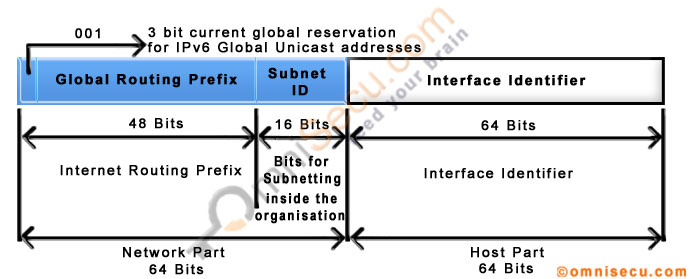
Global Unicast Ipv6 Addresses Global Unicast Ipv6 Address Prefix Format And Range
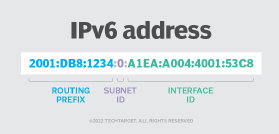
What Is An Ipv6 Address
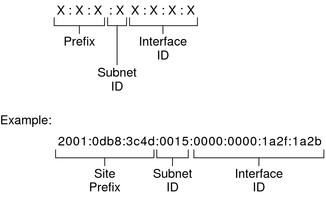
Ipv6 Addressing Overview System Administration Guide Ip Services


Comments
Post a Comment